Friday, September 2, 1994

The Morning After and Bastogne

During the Ardennes Campaign and the 467th AAA was attached to the 4th armored Division.

In mid-December '44, the 467th Battalion was providing air defense for Luxembourg City. This was an interesting time with V2 rockets frequently flying overhead. The Germans attacked out of the Ardennes Forest and suddenly caught by surprise the Allies gave ground. Patton quickly organized portions of the Army to provide relief. The Battalion was attached to the 4th Armored Division and drove northward into the German southern flank of the Bulge. The 467th AAA was in combat for 41 days during the Ardennes Campaign. They engaged 74 enemy aircraft but were also often used to guard roads.

On Dec 26, 1944 elements of Patton’s 4th Armored Division attacked from the South and succeeded in make contact with the surrounded Americans at Bastogne. The 101st Airborne Division had been encircled and had held the city for several days under extreme odds while refusing surrender demands form the Germans. The 467th was deployed around the city during the initial relief and later to protect the city from further attack.

This linkup of the two forces broke the siege of Bastogne and was one of the great turning points in the Battle of the Bulge. Bastogne was another time Dad remembered well and was proud of perhaps being part of the 4th Armored Division to play a part in the dramatic rescue and relief operations. Being with him during this part of the trip took me back to watching “Patton” with him when I was 12 or so years old and I was beginning to understand the relationship.

PastedGraphic-1994-09-2-19-44-1994-09-2-19-44.png

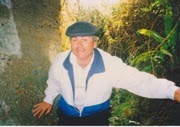
We get up early to drive to Bastogne. First we hit a park where they have turned pieces of old tanks into something that kids can play on and interact with like a working turret that you put your head into and can swing around in. Swords into plowshares I guess. We hit the supermarket and grab a few supplies for the road and its off to Bastogne.

Here is John playing Tank Commander at the public park.

1994trip_ayweille4-1994-09-2-19-44-1994-09-2-19-44.jpeg

Dad was attached to Patton’s 3rd Army, 4th Armored Division for part of this campaign and he was also deployed at all kinds different spots in this region including Aachen, Germany, Maastricht, Netherlands and other places that are not too far away. We drive through Bastogne and see first hand the narrow multiple street entrances to the center of town. We decide to spend another night with the innkeeper in Aywaille so we head back do a little more sightseeing and plan the next part of our trip into Germany.

We drive through some of the areas of the Battle of the Bulge and go around the Aachen area as well where Dad spent considerable time.


Next: Goodbye Belgium into Germany: Where's the Remagen ...

Thursday, September 1, 1994

The kind innkeeper of Aywaille

We get back to the car after being rejected at the hotel. In the dark we do the best we can to continue to navigate through town. The good news is there are only a few main streets and we are looking for a house up the hill a bit on the other side of town.

We find what seems like the address its a very large white house that looks almost semi-industrial but nice enough. We knock and the proprietor greets us and he can actually speak reasonable English.

He is instantly excited to hear that Dad is a veteran since he was a little kid during the conflict and remembers the occupation. He invites us in and sits us down to have a few beers with him. Nice, I am very happy at this point being a fan of Belgian beer.

We all get a Chimay Rouge and chat for 30 minutes or so. We learn that the owner often rents his house for meetings and catering events,etc and he has a large kitchen in the back but there is nothing tonight. We work out a deal for a room that seems like a real discount compared to what we would have paid at the hotel that rejected us. Only the deal gets sweeter as we find out we will each have a private room and the price is the total price which we thought was reasonable for one room was for all three rooms.

I have been driving all day long and need a good meal and perhaps a few more Trappiste beers that I am dying to try out. Dad is very tired and doesn’t want to go and he also is not hungry so after a beer and some snacks we get him setup in his room and head out to walk into town to a nice little restaurant area near the River. There were about 6-8 restaurants all in row with canopies etc for al fresco dining. We pick one and settle in. Its been a great trip and we have nice meal and some more Trappiste beers to talk the evening away. We eventually stagger back to the hotel and into our private bedrooms. Ahh PRIVATE ROOMS no snoring to deal with…..

Next: The Morning After and Bastogne

No room at the Inn

As I mentioned the earlier article we had no reservations for some of the whole second week of our trip. As afternoon turned to evening and we were getting farther into the Belgium mountain area I began to worry. I think the plan was to drive to Bastogne but we were slowed a little at border control and by our 4-cylinders.

I suggest that we start looking for a place but as we head into the hills there are less towns and population. I see a sign for “Spa” and that seems like a good name for a tourist town but the roads and very windy and its hard to navigate or get our bearings since its getting darker. I remember we stopped at a station and asked for some suggestions. I remember a guy in a Mercedes recommends a hotel that has a nice fish restaurant outside of the town of Aywaille. I tell him I have a map but I really cannot see anything in the light and he says to follow him and he will take us close to the turn off for the town. I follow his taillights for awhile through some twisty, winding roads and then the sign for Aywaille leads us off to the right.

We feel like we are lost as its getting late and its somewhat mountainous woodsy territory, but we finally get into the Aywaille area the hotel that was recommended is right at the edge of town and is called something “Roses”. Its a very quaint hotel and has an attached small restaurant and bar area. I pull into the parking lot and head into the lobby to negotiate for some rooms. John has been enjoying some Cabernet during the long road trip and saddles up to the hotel bar area. I can feel the hotel manager’s attitude shift as he scans us over more carefully.

Manager - “I am sorry sir but we are fully booked and do not have any rooms this evening”

Me - “Now we’ve traveled a long way and my father is an elderly man. Is there anything you can do to help us out? “ (I am playing up the old man card but I knew my Dad could kick-my-arse even though he was turning 70).

Manager - “I am sorry but are all out of rooms and you will have to leave the bar area as well since we are closing”. (Ok great they don’t like us at all its obvious from his mannerisms. No room at the Inn)”

Me - “Please, is there anything in town or nearby that you can recommend or something we could try out given the late hour?”

Manager - “There is a house at the edge of town up the road that sometimes lets rooms I can give you the address”.

We are running out of options and its getting late we need to try this out. I thank him and leave but I am expecting a barn with donkeys at the address he gave me.

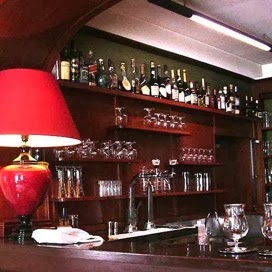
Might this be the bar that rejected some poor weary travelers? Its O.K. we got something better.

bar-lounge-1994-09-1-19-00-1994-09-1-19-00.jpg


Next: The kind innkeeper of Aywaille

Wine, Street Sausages, and the Road to Belgium

Off to Belgium:

When we are beginning our long drive from Normandy to Bastogne region of Belgium I tell John we should stock on some French red wines and load up the trunk while they are still so cheap. I mean really its cheaper than soda at the time we were there. We get a few bottles of some Chateau variety and since I am driving all the way I am not able to enjoy any until we reach our destination.

We also get some great sausages grilled from some street vendor in fresh baguettes for our lunch on-the-go. For me, that was one of the best sausage sandwiches I have ever had. Perhaps we bought them when leaving Amiens but wherever it was it was really good.

We began our drive from Amiens to Belgium and at some cross over point we have to stop for passport control since this is prior to the EU. Not sure if we hit a strip of an autobahn type highway but suddenly the driving is really fast and I have a cheap four cylinder rental. I made the mistake of being in the left lane for awhile but quickly realized I had to get over and stay over.

173px-Flag_of_Belgium.svg-1994-09-1-14-00-1994-09-1-14-00.png

I read the posted major highway speeds in the Netherlands are around 81 mph after I do the metro conversion of course. Here I am talking about the 120km variety.

We stop to hit a quick late afternoon bite and a bathroom break then we keep moving.

images-1994-09-1-14-00-1994-09-1-14-00.jpg

I actually like this more “honored” system of stay over to the right if you are going slower and wish we had it more ingrained in the United States. People drive at all kinds of speeds in all kinds of lanes leading to lots of passing on the right and potentially alot more traffic incidents. Not sure if the statistics back this up but if people going slower would move to the right and people did not pass on the right at a whim it would seem to lead to less trouble overall.

Next: No room at the Inn

Lavomatic? Si vos plait.

Sept 1, 1994

We have a rough plan to leave Normandy and stop in Amiens for a pitstop. Our original itinerary was to find a place to stay around Amiens but we decide that we want to make it all the way to Belgium so we have more time in the morning to go around Bastogne and other places in that area.

Its been a week or so now and as three grown men living in close quarters who have been doing alot of outdoor walking and hiking its past time to get some laundry done. As we near Amiens we decide a large town like this should have quite a few laundromats. John and I have each had a few years of high school French but we are pretty bad and I can’t do much more than ask for “3 more beers please?” and “where is the bathroom?”. I have never done laundry in France or had a class where you pretend to do laundry and that’s unfortunate at this point. In class we practiced ordering soup, catching a train, going to the movies, more wine and baguettes. So it was time to try out my Dad’s newly acquired Radio Shack language translator!

My Dad had figured he would need a language translator at some point on this trip and had purchased a LCD handheld language translator from Radio Shack. Very alpha technology, as it did a few major languages, you typed in a word and it gave you the answer in the other language. So far it had not been put to use but here was its chance with the word “laundromat”. My Dad and brother were excited to try it out.

Type in:

L-A-U-N-D-R-O-M-A-T

Answer:

L-A-V-R-O-M-A-T-I-Q-U-E

Looks good. We get to town and start asking. “Ou est LAVAMATIC” .. “Je Voudrais LAVROMATIC”, “S’il vous plait LAVOROMATIC”. Its as bad as CAEN when we were asking for directions to the Womens Abbey and people thought we wanted women. People are not getting what we are saying and its getting frustrating. Again, at this time in history, there is no YELP or google map for us just the language barrier with our fellow humans to overcome. After a significant number of attempts an English speaking guy overhears us and asks.

English speaker: “What are you trying to say?” “What do you want?”

Us: “We need to do laundry ... what were we saying?”

English speaker: “I have no idea?! BUT there’s a laundromat about a block away down there”

While John sits with the laundry, Dad and I go to check out the Amiens Cathedral about a block away. Amazing Cathedral its really a tall ceiling inside. Thought I saw some Joan d’Arc memorial but wasn’t sure.

1994trip_amiens1-1994-09-1-10-00-1994-09-1-10-00.jpeg

Dad enjoyed the Cathedral and we head back to the laundry. I watch the laundry for awhile and John hits the cafe around the corner for a beer. After that, I grab an espresso before we leave since I was about to drive a pretty long way to Belgium.

Finally we are done and on the road. Off to Belgium to find something, we are not sure what really, but we are targeting some lodging to get us within striking distance of the Bastogne area since Dad was all around this area during the Ardennes campaign and the Battle of the Bulge.

Next: Wine, Street Sausages, and the Road to Belgium

Wednesday, August 31, 1994

Arromanches and the Museum

Our last days in Normandy we also visited the other beaches and the related museums such as the beautiful beaches at Arromanches where can still see and swim alongside sunken Mulberry harbors left from the invasion.

Arromanches is to the East and closer to the British landing beaches

There is a nice D-Day museum there were found pins, insignia.

arromanches-1994-08-31-19-44-1994-08-31-19-00-1994-08-31-19-44.jpg

At the nearby museum I gathered a few medals and momentos along with John and Dad. I bought a pin of the 29th Infantry “blue and gray” that had done so much and suffered so badly on the beaches.

Next:

Breakfast Galettes

We wanted breakfast one morning in Port-en-Bessin and absolutely could not find anything open at least not obvious to non “Norman-savvy” Americans. So we asked at the Hotel de la Marine and they said we could likely get galettes right around the corner if we hurried.

Well we walked down around the corner and down a few blocks back and forth and everything just looked like residences with few or no windows and nobody was on the streets. Like a ghost town since we thought everyone was at work likely at this time of day.

Eventually I noticed there was a particular side door that people were occasionally popping out of at various intervals. We decided to try it out and see what was behind this door that seemed to lead into a residence. Well we knocked and opened the door and suddenly we were in what I recall looked like the lower floor of a residence with a bunch of tables in an open space with large number of locals eating galettes and drinking cider from ceramic jugs.

Fantastic we are hungry as hell but we don’t quite know how the system worked. As far as we could understand this local family opened their doors for breakfast and its a real communal affair sharing tables,etc. We saddled up and ordered a nice breakfast especially with accompanying local homemade cider.

.galette-1994-08-31-19-51-1994-08-31-19-51-1994-08-31-19-51.jpg

Galette -- often served with mixture of savory ingredients.

Galettes are one of the classic food items in Normandy as is cider and other apple-based products (e.g., Calvados). I knew galettes as the savory buckwheat crepes from my last trip through Normandy with Sandy, Jean, and Clara. Just great stuff and I wish I could find it done well back in the States. Of course its like crepes but much heartier and with the homemade cider a great combination. Good stuff!


Next: Lavomatic? Si’l vous plait.

The American Gets a Medal

Abbaye-1994-08-31-19-44-1994-08-31-19-44-1994-08-31-19-44.jpg

The Abbeye aux Dames, Caen

As a surprise to my Dad, John had applied months before for him to receive the Freedom Medal that was offered to veterans who had been involved in one of the major liberating campaigns in France. The “Abbeye aux Dames” or the Womens Abbey in Caen is where this took place and I believe the then mayor of Normandy was doing the honors of handing out the medals. We were a little lost on the way into town in our little economy car and John rolled down the window and asked a few locals “Wheres the womens .. Abbey?... we are looking for the women’s .. Abbey?” We got some very strange looks and then it dawned on us they are not hearing the “abbey” part. Some women even picked up there walking pace quickly away from us.

freedommedal-1994-08-31-19-44-1994-08-31-19-44-1994-08-31-19-44.jpg

Some of the other attendants were standing in for a friend who couldn’t make the trip due to health or receiving it posthumously for someone in their family. There many several veterans mostly British who had taken part in various stages of the French Liberation and later battles. Dad had been on Omaha beach in the morning and through five major campaigns so overall he was a somewhat unique character.

They welcomed and treated everyone very well (a little champagne was offered) and the staff showed alot of respect to the veterans all within this beautiful historical Abbey which was very solemn and peaceful. Dad was of course the consummate American in polo shirt and khakis. I was incredibly proud of him in that moment, since he wasn’t dangling his many medals but he was deserving of anything they could offer and his service to the liberation goes way beyond the Normandy beaches.

Since we were two months late for the Anniversary the crowds had thinned a bit. It was probably a madhouse the week of June 6, 1994. We wish we could have been there.


Next: Breakfast Galettes

Tuesday, August 30, 1994

American Cemetery Omaha Beach

The American Cemetery above Omaha:

1994trip_normandy88-1994-08-30-17-36-2012-10-6-12-58.jpeg

The front entrance contains some beautiful statues and monuments.

There is also a registry where you can look up who is interned in the cemetery and what site they are located at. Dad, John, and I went in and Dad found several guys from the 467th AAA that had died on Omaha and he also found Captain Napier’s location who was killed in St. Lo in July 1944 by American bombing.

1994trip_normandy85-1994-08-30-17-36-2012-10-6-12-58.jpeg

This a beautiful and serene place and “Star of David” markers are also intermixed with the 1000s of white crosses. We left Dad alone for awhile but we also helped for some time finding the sites of people that he knew or were in the 467th AAA.

Dadatddaycemetery-1994-08-30-17-36-2012-10-6-12-58.jpg

Below is Captain Raymond Napier’s marker.

CO of Battery A, 467th AAA who had done such an admirable job of directing his units onto the beach in the morning and keeping many of them from significant harm through his reconnaissance and leadership. For him to lose his life at St. Lo from misdirected friendly bombing must have been incredibly disheartening to the others in his Battery yet they went on to a significant number of additional hard battles and missions for another 10+ months with several more unit commendations.

napier-1994-08-30-17-36-2012-10-6-12-58.jpg

Placido Quinonez, Ed Durnult who both died on Omaha in the 467th AAA landings were also buried here and we visited their resting sites. I noticed that Dad’s Battery A group was from all over the country Colorado, New Mexico, Texas, Illinois, New Jersey, Louisiana and from many different religions and ethnic groups. They were from all over the country and put together in a small units of 8-16 men. Brothers drawn together from different regions and backgrounds under extraordinary circumstances. Whenever they talked or recollected there was always a “deep” bond and solemn respect for each other.

Arromanches and the Museum

Visiting St Lo

The LIberation of St Lo

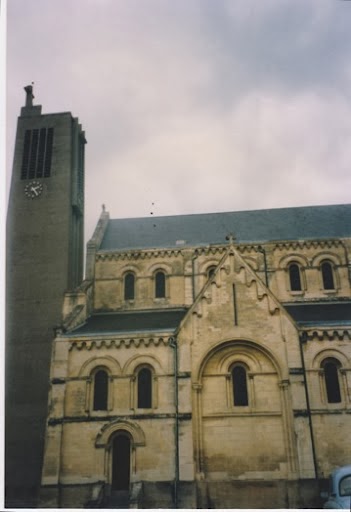
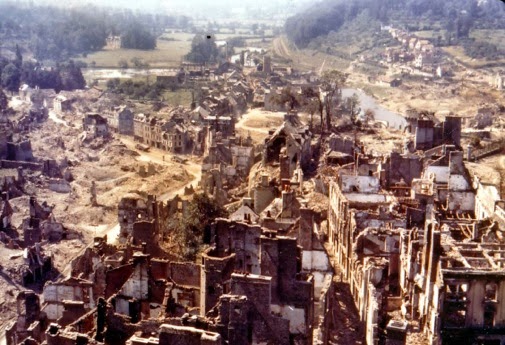
My Dad was very proud of the liberation of St. Lo and mentioned it alot when discussing his tour in Europe. This city was brutalized and to see pictures of it with barely nothing standing is a heart wrenching reminder of the destructive power of artillery and bombing. Dad remembers that one Church in town withstood the bombing and fighting and we went to see that Church that still stands today. Here is a picture we took of it as it was in 1994.

1994trip_normandy73-1994-08-30-16-19-2012-10-6-12-54.jpeg

This largely happened during the month of July 1944. As an AAA Battery you get attached to whoever needs you and often reassigned and attached. After the beaches were secured, Battery A of the 467th AAA spent some time protecting ammo dumps and the like from aircraft attack and then they began significant fighting through hedgerow country around the various towns and villages. I am little light on the time period details but I remember my Dad discussed that a particular British gentleman that was with them did not dig and sleep in his foxhole at night like the others. Well they found him dead one morning from shrapnel between the hedgerows. While the Normandy beaches were brutal the Liberation of St. Lo took a month or so and was a tough fight especially for those in the hedgerow country.

Here is a shot of part of the town of St. Lo in its devastation.

StLoinruins-1994-08-30-16-19-2012-10-6-12-54.jpg

We visited St. Lo right after Pointe Du Hoc. Dad mentioned to me alot about hedgerow fighting stories, including lots of other tragedies and difficulties that happened during this period such as bombing fratricide incidents. The fratricide incident was largely due to lack of ground-aerial coordination at that time and other miscues during operations. Smoke from earlier bombings had blown over friendly troop areas and masked actual targets. Captain Napier , loved by all the men of Battery A, also died during this fight from inaccurate American bombing that struck the Battery A Command Post due to inaccurate bombing.

Halftrack_crew-1994-08-30-16-19-2012-10-6-12-54.jpg

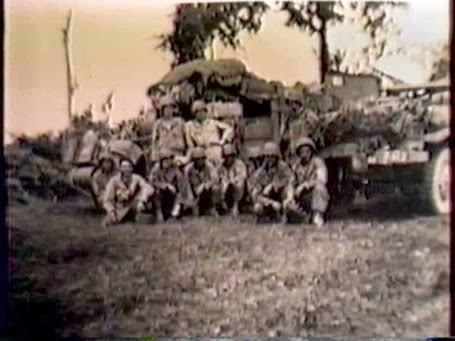
Some of Dad’s Brothers-in-Arms Battery A Unit 4

--short story of the accidental bombings from Hyman Haas --

“We slowly advanced to the St.Lo area where we did much maneuvering and firing. On July 25th we were surprised to see wave after wave of our B17 and B24 Bombers fly overhead and begin to bomb the St. Lo area. It seemed hours that they Bombed. They also Bombed our Command Post and most of our men there, including Captain Napier, were killed. Lieut. Paul Nauer became our new C.O. The news of Captain Napier's death had a terrible effect on the unit. This was a shock that was hard to overcome. We had dug and fought our way to this position for almost two months and we were showing the strain. The positive part of the bombing was that soon we broke out of Normandy.” -- Haas

The breakout at St. Lo called for a massive bombing of the German lines prior to the Allied attack. As the lead bombers struck the target, huge clouds of smoke and debris were carried north over the American lines. It completely obscured the target to the succeeding waves of bombers. Those bombadiers 'dropped' on the smoke clouds as they were trained to do. As the clouds drifted northward, the bombs began dropping on units staged for the attack. Lieutenant General Leslie McNair, Commanding General of the Army Ground Forces, had traveled from Washington to observe the attack - he was killed in the bombing. As mentioned, the 467th also lost men in the accidental bombing of American of the front lines that day.

Out of the pan and into fire right off Omaha Beach. The halftracks of the 467th AAA were deployed around and through the St. Lo area throughout the month of July. Once the breakout occurred they began a swift march towards Paris area during August during its liberation period and then on into and across the Belgium region towards the battle of Aachen.

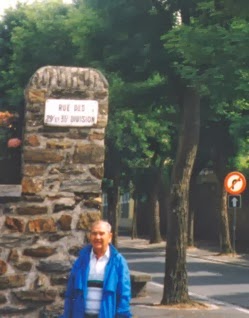
During St. Lo, I recall my Dad saying his unit was attached to the 29th so Dad was excited to find the street in St. Lo named in honor of their Division and the 35th.

rue29th-1994-08-30-16-19-2012-10-6-12-54.jpg


Next: American Cemetery Omaha Beach

Pointe Du Hoc

We visited the cliffs of Pointe du Hoc and got a feeling for what the 101st was up to with those cliffs and big gun emplacements. The moon craters were everywhere from being bombarded and are still there after 50 years.

You can see it here in this overhead from Google Earth.

pointeduhoc-1994-08-30-10-04-1994-08-30-15-04-1994-08-30-10-04.png

You can go into the gun emplacements and truly see how large a set of sguns were emplaced here.

1994trip_normandy52-1994-08-30-15-04-1994-08-30-10-04.jpeg

It began to rain during our time at Pointe du Hoc but we stuck around long enough to tour and walk through most of what was there.

I was impressed by the unbelievable size of the gun emplacements and the engineering systems needed to run everything. There were literally large train tracks systems built to bring the ammunition forward to be placed in the gun.

1994trip_normandy61-1994-08-30-15-04-1994-08-30-10-04.jpeg

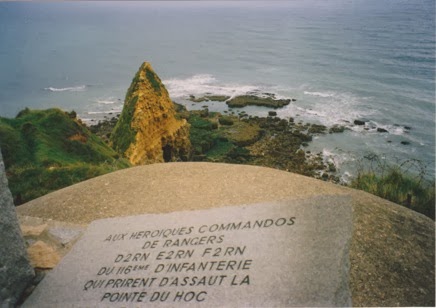
John and Dad checked out some of the views from the bunkers and Dad spent some time reading the Ranger memorial plaque. I remember him being interested in that because they had camped nearby some of the Rangers in when marshaling in England prior to departure.

1994trip_normandy64-1994-08-30-15-04-1994-08-30-10-04.jpeg1994trip_normandy65-1994-08-30-15-04-1994-08-30-10-04.jpeg


Next: VisitVisiting St Loing St. Lo

Finding the 467th AAA Memorial on Omaha Beach

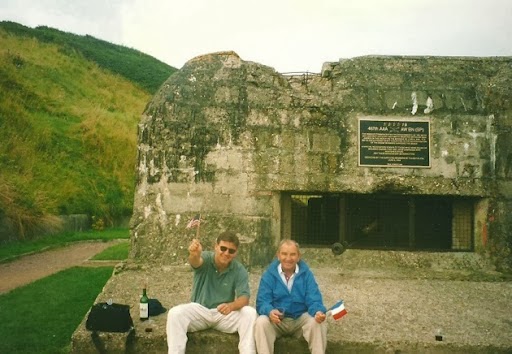
Searching the various pathways, bunkers, and dugouts around the St. Laurent sur Mer pass we stumble across a dedication plaque to Dad’s 467th AAA AW Battalion not even expected or known by anyone of us ahead of time.

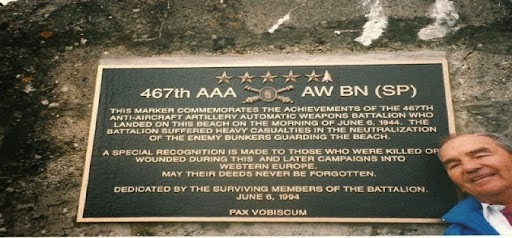
This was a fantastic find and made Dad and our day. Here is Dad next to the plaque.

467plaqueanddad-1994-08-30-12-44-1994-08-30-12-44-1994-08-30-12-44.jpg

As you can see from the plaque some of the others members had been in attendance at the dedication when this was placed on the pillbox on June 6, 1994. The was the site of a German 88 gun which was knocked out by members of the 467th AAA Battery A on the morning of June 6, 1944 (see Sgt. Hyman Haas’s account of that incident). Dad was in the same platoon and can vividly remember Hyman’s unit firing on this defense. The defense bunker is part of Widerstandsnestern (WN) 65, in German basically meaning resistance nests.

This is somewhat directly in the center of the Omaha beach area (pretty much were Dad’s platoon landed) and the main armament of WN65 was a 50 mm cannon housed in a type H667 casemate that was only completed in late April 1944. Also installed nearby were two mortars housed in Tobruks (machine gun nests basically), and covering the road further up the hill was an old 75 mm gun hidden in the woods.

BUN-1994-08-30-12-44-1994-08-30-12-44.jpgtobruk03-1994-08-30-12-44-1994-08-30-12-44.jpg

WC65 had a lot of underground interconnecting bunkers and storage facilities in the hills above the draw.

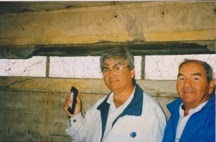
Here we are exploring some that are still there.

1994trip_normandy37-1994-08-30-12-44-1994-08-30-12-44.jpeg1994trip_normandy38-1994-08-30-12-44-1994-08-30-12-44.jpeg1994trip_normandy39-1994-08-30-12-44-1994-08-30-12-44.jpeg

Unfortunately Dad missed this dedication and reunion but had gotten in touch with a few of the surviving members, mainly Hyman Haas, whom I had also emailed over many years about Dad. Hyman Haas later sent Dad a personal video and a correspondence about the dedication ceremony. Some of Hyman’s description of the beach scene was referred to and used by historian Stephen Ambrose in his D-Day chronicles, pg.489 of his book D-Day. I will likely have a separate entry on Hyman if I can pull up some of his old emails. Fantastic guy may he rest in peace and I drew much of my evidence and knowledge from crosschecking his oral record against other records like Navy LCT official records of after actions and later various battle incidents he recalls in his memoirs..

The pictures below taken by John shows Dad and I celebrating awhile John snaps a picture. John is celebrating too he’s just not in the picture! See him above in trenches.qw

467plaque2-1994-08-30-12-44-1994-08-30-12-44-1994-08-30-12-44.jpg

While this trip had alot of great moments this was one of my favorites. When you find something directly related to your journey that you didn’t even know you were looking for its just great.

Here is Dad walking up the same draw from the Beach that they left heading towards WN65.

1994trip_normandy41-1994-08-30-12-44-1994-08-30-12-44.jpeg

I just wish Dad could have met some of his old buddies their just weren’t many of them left from his Battery A unit. Hyman Haas (Battery A) and friends (from various Batteries) had been here a few months earlier to dedicate this plaque. Here is the same bunker the day after the landings on June 7, 1944 showing some POWs cleaning up the beach area.

pillboxdayafter-1994-08-30-12-44-1994-08-30-12-44-1994-08-30-12-44.jpg


Next: Point Du Hoc

Snails on the Hills

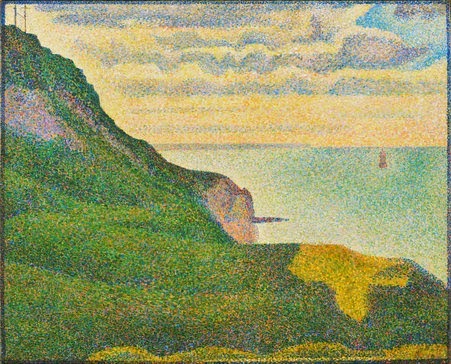
One morning while staying at the Port-en-Bessin Hotel de la Marine Dad and I climbed up the hills to the South of the harbor entrance. It was a beautiful and the picture below I took is from a similar vantage point. Although I realized years touring the US National Galley of Art that Georges Seurat’s painting of x-1994-08-30-06-30-1994-08-30-02-30.gif1__2524252125402521__x-1994-08-30-06-30-1994-08-30-02-30.gif2__2524252125402521__x-1994-08-30-06-30-1994-08-30-02-30.gif”Seascape at Port-en-Bessin” is the exact location as one is climbing on the trails away from Hotel de Marine.

seurat_bessin-1994-08-30-06-30-1994-08-30-02-30.jpeg

hill_portenbessin-1994-08-30-06-30-1994-08-30-06-30-1994-08-30-02-30.png

The sun had just risen and as we walked up the cliffs talking about a few things and how well the trip was going and then I noticed lots of things moving in grass.

There were literally hundreds of snail climbing through the dewy morning sea grass on the hill. It was just really interesting and I’ve never seen anything like it.

Snails-1994-08-30-06-30-1994-08-30-06-30-1994-08-30-02-30.jpg

Ok, we were to eat escargot appetizers later that night in the hotel seafood restaurant right below the cliffs.

Fresh, local food. Ecofriendly. I haven’t had snails since because I know they are not fresh. Or am I kidding myself. It didn’t matter the Hotel de la Marine restaurant escargot was fantastic in all its buttery and “garlicky” goodness as were the seafood entrees. Really love that town and love that hotel.

Also they had a great pastry shop on the main drag as brother John also discovered and brought back several treasures for us one morning.

escargot-1994-08-30-06-30-1994-08-30-06-30-1994-08-30-02-30.jpg

Yum!


Next: Finding the 467th AAA Memorial on Omaha Beach

Monday, August 29, 1994

Which Beach is It?

We were constantly wondering where Dad actually landed as we were walking Omaha beach. There were multiple reasons for this given the general lack of available information at the time. First, the 467th AAA was deployed up and down the beach for general protection and assistance of the landing forces. Second, due to beach congestion issues, smoke, confusion many of the LCTs came ashore in unintended locations west and east of the St. Laurent location.

After our trip, in the last few months of 2011 actually, I was lucky to find records of the actual LCTs that carried the 467th AAA units and was able to piece together some of the puzzle. Also Hyman Haas’ biography helped tremendously since he was in the same Platoon of Battery A and in the same LCT that morning.

dday_omaha-1994-08-29-14-00-1994-08-29-14-00-1994-08-29-10-00.jpg

Dad landed as part of Unit 4, 1st Platoon of the 467th AAA Battery A which was the first 467th AAA Battery to land. The 467th AAA AW Battalion was attached to many different landing groups through the D-Day landings and often due to reduced air threats ended up applying their weapon carriages to the defenses in the hills.

As some 467th AAA Battery level organization background, there are 2 tracks to a unit an M15 and M16 and there are 16 tracks in all for a total of 8 units/16 halftracks in the Battery A commanded by Captain Napier at the time of the landing. There is a command unit.

From one record here was the plan:

6 June 1944 - Entire Battalion (less residue) landed on Beach 46, near St Laurent-sur-Mer, France as follows: Battery "A" 0830 or around H+120.

From my Dad’s oral record he says he was in around 0840-0900 (Hyman Haas predicts earlier 0800-0830 but there is likely a little slop here in the recollections). But its almost certain he wasn’t in one of the pushed back LCTs due to beach congestion or damage and he remembered going in with Captain Napier so this eliminates quite a few other LCTs. My Dad’s Sergeant was Robert Stratman and in an email from Hyman Haas he indicated that the unit was right behind them on the same LCT. Being in the same Platoon this likely makes sense and probable. From Hyman Haas’s account it sounds like the first platoon also moved to the right upon landing and was located near the middle-west edge of Easy Red.

From Hyman Hass’ Bio

“We left Portland harbor at about 8PM amidst much whistle blowing, it seemed as if every ship was blowing its fog horn. There were ships and boats of every description everywhere. I couldn't help reflecting that we had, since leaving Exmouth seen and were part of one of the greatest spectacular events ever. At this time during our departure from the port of Portland the scene of all those ships were overwhelming. Fast Cutters pulled up nearby and men with megaphones were shouting "GOOD LUCK" at us. They were cheering at us and we were cheering back. We took our place in a long line of LCTs and made our way into the English Channel. By the time it got dark I decided that I had better get some sleep. Up to this point I had given little thought of what the landings might entail. The thought that I might be killed or wounded never entered my mind. The spectacle was too overwhelming and besides I had so many details to see to that I had no other thought than to digest and memorize all the information that was given to me. I fell asleep immediately. Sometime later I was shaken awake by our Corporal; "Get Up, Getup, We're turning back, the invasions been called off." After I fully woke I went to our 1st Sergeant who told me the operation was probably postponed because of the weather. The weather looked good to me. I could feel no rain, spray yes. As there was nothing I could do about it I went back to sleep and when I awoke we were back in the same spot we were in before we left. I didn't know whether to be disappointed, or not.

     I can't recall the hour when we were told that the invasion was on again. That evening we repeated the departure scene over again. The same activities and spectacle. This time I didn't go to sleep. Again I couldn't tell the time when we heard the motors of hundreds of Planes. We couldn't see then as it was pitch black, we couldn't see our hand in front of our eyes. We kept on sailing our excitement rising. Whatever spectacle we had witnessed before would soon be replaced with another kind. In those latitudes there was only about 4 hours of dark at night. We first saw the first glimmers of light very early that morning and as it got lighter ships of all kinds became visible. Destroyers, Cruisers and Big Battleships. There were Ocean liners and men were climbing over the sides on nets and into small Higgins boats and then they started circling. We had stopped near a big Battle ship. At about 05:30, or so I think, it could have been earlier. The Battle Ship let go a salvo with all its big 15 inch guns. I had always wanted to hear what one of those salvos sounded like. The sound wasn't like the distant thunder I had imagined. It was like a very loud rifle shot with plenty of concussion. A sharp crack. Then the shell could be seen as all the shots were tracer. We then heard the Bombers overhead. They were to bomb the beaches. There seemed to be no end to them and all the cannonading from all the naval vessels acting as field artillery. To our right about a half mile away a LCT with rockets let go with all they had. Between the Battleship and the Rocket LCT we were witness to some terrific Bombardment. We were told that the battleship was actually firing in support of the Utah Beach landings. We never found out the name of the battle ship, perhaps she was the Texas.

     06:30 the bombardment stopped, with the Airforce and the off shore bombardment so terrific we couldn't see how anything could be left alive on the beach. We also knew the engineers had landed so they could blow up any beach obstacles. The morning though overcast was showing lots of light, we couldn't see the shore as there was much fog and smoke. All we knew was the first men were ashore. We couldn't estimate how far from shore we were, but at 07:00 AM a boat pulled near and again a man with a megaphone yelled at us;"Go On In, GOOD LUCK. Well that started us off. We began our run onto Omaha Beach.

     The run in took at least a half hour and probably more. We had no idea of what was happening on the beach, except as I looked over the side I saw the body of a GI floating by. A short while later a shell exploded about 20 feet away on my side. Somebody had targeted us. There were one or two more shots and Captain Napier yelled that everyone should keep our heads down during the run. We were near the beach I still couldn't see what was ahead, except that the smell of smoke was heavy. We could clearly hear the distinctive sound of German Machine guns. They had such a high rate of fire they sounded like a burp and that's how they got the name burp guns. We had long ago been told that and now we were hearing the sound again. We had found a clear spot through the obstacles and made for shore and soon the ramp was down and we started our motors. Every motor started and soon we were ready to land. Someone gave out with a Rebel Yell and our 1st Sergeant who had been looking out in the front of the LCT shouted back; "Shut up you shmuck! In a minute you may be dead!" The Captain's command Halftrack was off first and as he got on to the beach he turned right (West). We all followed suit. I found we weren't exactly on shore as when we went in I was sitting in the cab of the Half track with the driver and the water went up to my chin, I grabbed my rifle and the driver's Thompson machine gun and held them over my head. I thought the driver would be completely under water. But he wasn't and we were soon ashore and we turned right and made for our place 30 feet from the vehicle ahead of me. My M16 was soon 30 feet behind me. In minutes the entire platoon was ashore. The noises of mortars and German Machine guns were louder and as I looked ahead the shore was littered with landing ships and craft. All aflame. I didn't know where to look first when I looked up on the Bluffs ahead and spotted a bunker that looked to me to be built into the hills. At the same time I also spotted an American officer with a full handle bar mustache and wearing shiny cavalry boots running towards me pointing at that German Bunker. Captain Napier was standing near me and he said "Go Get it.. I immediately saw we couldn't fire ahead because of our barracks bags being piled up in front so I ran into the surf and signaled my two Half tracks to follow me into the surf. They caught on immediately and turned right and drove into the surf deep enough to cover our tracks and wheels. I took up a position behind the rangefinder and in an instant we opened fire. We missed our first three shots as a shell went past us. I made an adjustment on the rangefinder and the next 15 shots went right into the gun port of the bunker. All the time my M16 were firing their 4 50 caliber machine guns at the bunker. No doubt the Bunker was dead.

     Breathing heavily with excitement I recalled the Halftracks out of the surf and now we were standing by and we could see the results of the German machine gun, mortar and artillery fire. There was complete Chaos on the beach in front of us. On our right all Giant LSTs, LCTs, LCIs were afire and exploding ammunition. It was difficult to see if any one was alive in, or on the ships and craft. To our left on the shore were tremendous amount of dead and wounded soldiers lying about in all positions, as we looked further we could see parts of bodies, arms legs, heads. We made our way through this Valley of death taking machine gun and mortar hits and adding to the casualties. We went through a blown hole in a wall, many of our GIs had taken cover by this wall and they died in groups or just been blown apart. We made our way through the opening of the wall and found ourselves on soft beach sand. and then the mortaring began . The sound of their coming sounding like the fluttering of a small birds wings I noticed an infantryman jump into a fox hole and a mortar shell went in with him.We were out of our Halftracks and under them for cover, some of the mortars flew right into three of our tracks. Suddenly the mortaring stopped and then A large LST blew up and sent a large amount of burning oil over our heads putting the bluffs ahead of us on fire. It seemed to me that every thing was on fire and that it wouldn't be long before we would all be dead. Panic wasn't far away. Somehow we kept together and soon we got the order to proceed ahead to the Beach exit and ride to the top of the bluffs. The Beach exit was called Exit E 1 and it led to the town of St. Laurent. On the way up the road we paused in front of the bunker we had knocked out and there were two wounded German soldiers lying on the parapet of the bunker: one of them was vomiting blood. As we waited to go on Macneil the Chief of section 2 ran over to me and shouted "Hey that's your bunker." For a while I thought he was accusing me of killing the Germans. Of Course he wasn't. Everyone was in a keen sense of excitement. We all were gasping for breath even though we weren't moving. We moved on away from the unsettling scene of the dying German soldiers. We Made our way to the top of the bluffs and soon the sounds of battle began to recede from our area and we began to breath a little freer. But not for long. We had dug foxholes and, from force of habit in training, a latrine. It was that latrine that a sniper took aim at. He wasn't a good shot as he missed whomever he aimed at, but whoever used that latrine had a shot aimed at him. We knew about the sniper and we couldn't locate him. Still whoever came to us and asked where our latrine was we pointed at it and sent the guy to it. A shot was followed by near hysterical laughter as the latrine user began to scatter away. None of us could explain why it was that we never warned any one away. We actually were looking for the sniper to show himself and he did to one of our men in another section who aimed his 4 50 caliber machine guns at him and stopped the comedy. We were off the beach and the sun came out and warmed us. We were soaking wet most of the day and now we began to dry. The most depressing thought we had was that what we had endured even though it seemed we had won a toehold on the beach was this day was only the beginning. We had no sense of victory, only dread. We had seen war up front there was nothing ahead but more of the same.. We weren't wrong.

     We stayed on the top of the bluff, a sort of plateau where eventually an airfield was built, three, or four days without any incident aside from the spectacular displays of AA fire coming from the ships anchored off the beach. Some, not many, German bombers came in after dark and dropped bombs, or tried to bomb the ships. I watched the display as we were told not to fire at night from our position. I recall the one time a lone german plane scored a hit. The ship blew up with a terrific explosion that turned the area blood red. The strange thing was that all the ships were firing and did so every time a german plane come buzzing over the ships. The sky was literally filled with tracers and explosions and not once did they bring a german plane down. At that position we sort of recouperated from the trauma of the landings. I recall the first food we ate was over 36 hours since our last meal. As armored and mobile troops we carried plenty of food and the utensils to cook though at that time we had the 10 and 1 rations which weren't bad. In addition we were issued, before we left the marshalling area, some sort of concentrated Chicken Soup which came in a self heating container. To heat the soup we pulled a string, or something and the soup heated. We each were issued 4 cans. and that was the first food we ate when we finally simmered down. The soup was delicious and we wolfed down three each before we decided to stop. After that we sort of normalized we took the waterproofing off our Half Tracks and made coffee. We had lots of ground coffee and we kept a pot on our stove. We also were issued a small two burner gasoline stove that you had to pump up before you lit it. We even gave passing Generals coffee.

       We would have been satisfied to stay in that spot for the duration but we got our march order after three, or four days. Our position atop the bluff felt like home, we never went far from it, not even to go back and look the landing beaches over. We'd seen enough of the landing Beach.”

The following map is an overlay map I made of what i could gather of landings from LCT after actions and verbal histories from 467th members.

Red is likely the rough area for the 2nd Platoon which landed slightly later on the famed LCT-30 and met with significant resistance. Blue is my best estate of the 1st Platoon area (Capt Napier had all halftracks go right (west after landing)) and this could have kept them out of some harm. To shoot at WN65 means likely Sgt Haas would have to have moved slightly east into position in the surfline after being told to go after it in order to get a clear shot at the gun. The LCT for platoon 1 was bound for Easy Green but could have easily drifted East into Easy Red territory as many LCTs in this area drifted Eastward that day.


likelylandings-1994-08-29-14-00-1994-08-29-10-00.png

HEADQUARTERS

FIRST UNITED STATES ARMY

APO 230

GENERAL ORDERS NO. 58

15 September 1944

Technician Fifth Grade Prue M. Collier, Medical Detachment, 467th AAA Battalion (SP), United States Army, for gallantry in action on 6 June 1944, in France. Early on D-Day, Technician Fifth Grade Collier, landing with his platoon on Omaha Beach under devastating enemy artillery, mortar, machine gun and rifle fire, completely disregarded his own safety to render aid to the wounded. He continually exposed himself to the incessant enemy fire for a period of 5 hours despite the pain from serious leg wounds and it was not until additional aid men had arrived that he agreed to be evacuated. The spirit of self-sacrifice of Technician Fifth Grade Collier in disregarding his own safety and injuries in order to help his comrades saved many lives and was an outstanding factor in maintaining the morale of the men on his beach.

By command of Lieutenant General HODGES:

HEADQUARTERS

FIRST UNITED STATES ARMY

APO 230

GENERAL ORDERS NO. 64

28 September 1944

Sergeant David M. Feit,Corporal Charles B. Patton,Private Glenn D. Bussard,Private Ben G. Clay,

467th Antiaircraft Artillery Automatic Weapons Battalion (SP), United States Army, for gallantry in action against the enemy on 6 June 1944, in France. Their platoon was pinned down on the beach on D-Day by very heavy machine gun fire, when a landing craft loaded with infantrymen struck an underwater obstacle nearby and overturned, throwing all the men in to the deep sea. The enemy immediately directed machine gun fire on the men struggling in the water, but these men voluntarily and courageously left their relatively safe place on the beach and swam out through the heavy fire to aid the wounded and drowning men. They assisted in rescuing some 15 infantrymen and by their heroism set an inspiring example to the men of their unit.

By command of Lieutenant General HODGES:

HEADQUARTERS

XIX CORPS

APO 270

GENERAL ORDERS NO. 43

11 October 1944

Captain Raymond T. Napier, Coast Artillery Corps, 467th Antiaircraft Artillery Automatic Weapons Battalion (SP), United States Army, for gallantry in action against the enemy in Normandy, France. On 6 June 1944, Captain Napier, landing on the beach at 0840 hours, despite numerous beach obstacles and intense machine gun fire, immediately set out to locate a well protected position for those of his vehicles which had cleared the landing craft. Moving steadily inland under intense enemy fire, Captain Napier, making quick decisions based on his reconnaissance, was able to move his vehicles so that they were never hit by enemy artillery fire. Captain Napier's leadership and disregard for his own safety contributed immeasurably to the establishment of the beachhead and reflect great credit upon himself and the military service. (Award made posthumously.)

By command of Major General CORLETT:

HEADQUARTERS

FIRST UNITED STATES ARMY

APO 230

GENERAL ORDERS NO. 10

17 January 1945

Captain Paul N. McCarthy, 467th Antiaircraft Artillery Automatic Weapons Battalion (SP), United States Army, for gallantry in action against the enemy on 6 June 1944, in France. On D-Day, Captain McCarthy's battery was subjected to concentrated 88mm and mortar fire. Many vehicles carrying vital supplies of ammunition received direct hits. The resulting fires and explosions threatened the lives of his men and necessitated the constant shifting of the vehicles. At great personal risk, Captain McCarthy, braving the enemy fire, personally directed the unloading of ammunition and evacuation of the vehicles. By his heroic actions and courageous leadership, Captain McCarthy reflected great credit on himself and the military service.

By command of Lieutenant General HODGES

Next: Snails on the Hills

First Look at Normandy Beaches

Our first view of the Omaha Beach area was beautiful and we stopped by directly on the way from Cherbourg in our rental car. There was a beautiful set of memorials to many of the Allied units and participants that had landed at the Vierville draw entrance and we walked through and read many of these monuments. Then we walked down the beach for quite awhile.

1994trip_normandy8-1994-08-29-13-44-1994-08-29-09-44.jpeg

John and I felt we needed to give Dad some time alone to walk and reflect so we gave him some private space as he began walking down the beach and looking around. You could tell he was in deep reflection. After awhile he called us over so we rejoined him.

1994trip_normandy10-1994-08-29-13-44-1994-08-29-09-44.jpeg

Dad wanted to take some of the sand back home with him so we had several film canisters with us that he began loading up with sand form Omaha. John and I also each filled up some canisters to bring home.

gettingsand-1994-08-29-13-44-1994-08-29-09-44.jpg

We walked up and down the beach for awhile exploring each draw and open space. In this Western section there were sidewalks and homes above parts of the beach since 1944 but it was still a fairly quite and serene beach and we were instantly impressed that things had not been overdeveloped over the 50 years since the landings.

1994trip_normandy15-1994-08-29-13-44-1994-08-29-09-44.jpeg1994trip_normandy19-1994-08-29-13-44-1994-08-29-09-44.jpeg

The hills are still filled with bunkers, interlaced underground passages, and interesting artifacts. Its hard to erase the huge engineering efforts that went into setting up such an extensive German defense system and the scars that were also left from the liberating forces fighting their way off the beaches.


Next: Which Beach is It?

Port en Bessin: Our Normandy Home Base

Port-en-Bessin

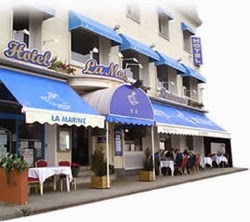
A port village nestled between the American and British Landings became our “home base” of operations for the several days we explored the surrounding area. Hotel de la Marine was comfortable and we enjoyed the food, the town, and the general peacefulness of the town was relaxing and a perfect match for our moods.

A canal system comes from the ocean port into the center of town since the tides shift so dramatically this canal is required to keep the docked boats afloat at low tide. Here is Dad and I looking back into town and part of the Hotel de la Marine is on the right of us.

1994trip_normandy2-1994-08-29-11-18-1994-08-29-07-18.jpegfacade_marine_perspective-1994-08-29-11-18-1994-08-29-07-18.jpg

This was hotel were years ago Jean and Clara had driven Sandra and I from Angers for an overnight trip. Great food and a nice typical Normandy sea town. I absolutely love this place. They had done renovations which made it even nicer.

The town has a number of nice local shops for pastries and places for galettes (see later story). The Hotel de la Marine served a nice dinner back then and we splurged which was perhaps the best meal of the trip.

Here were are out on the pier jutting into the Ocean to the left are the cliffs above which we saw all the snails climbing through the grass in the morning that is discussed in another article.

1994trip_normandy-1994-08-29-11-18-1994-08-29-07-18.jpeg

I noticed that this plaque has been erected on the town pier for the 60th Anniversary commemorated the fact that the town was a major fuel supply area important to supporting fuel importing for the later inland campaigns.

800px-Port-en-Bessin-Huppain252C_Calvados252C_Tablet_of_the_D-day.JPG-1994-08-29-11-18-1994-08-29-07-18.jpg


Next: First Look at Normandy Beaches